

Caste in Drag
On Ex-Gay Theology, Queer Drag & The Hidden Theater of Heterosexual Order (by William Matthews)


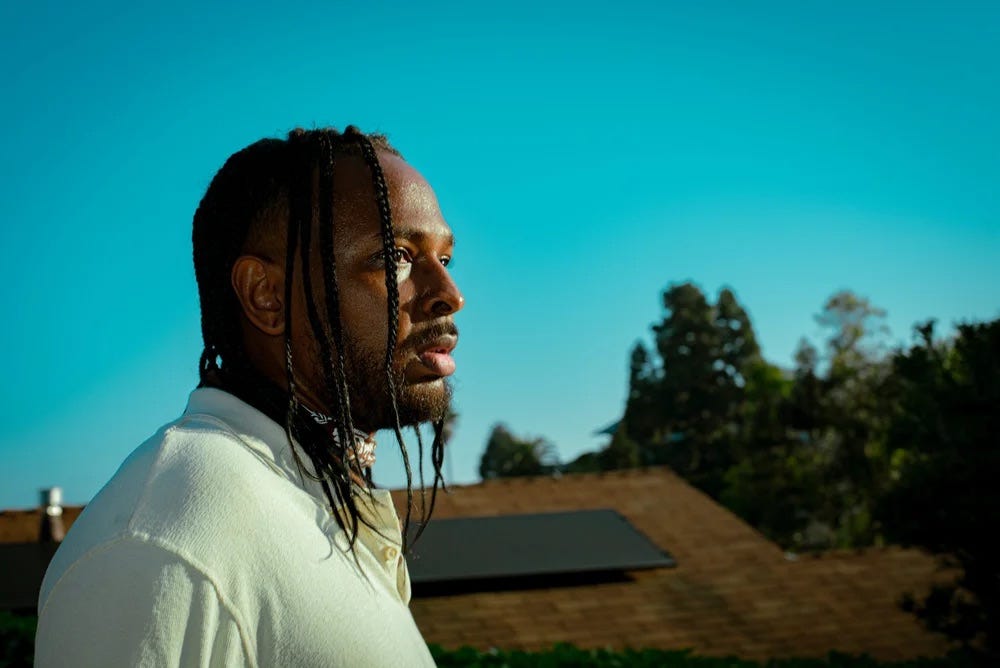
For pride month I have been featuring guest essays from queer writers. This week’s post is by William Matthews, a prolific recording artist that spent years in the world of Contemporary Christian Music before coming out and upending his career. His thoughts on queerness and Christianity come from a hard-fought lifetime struggle for authenticity. This is a slightly longer essay than usual, but well worth your time. His words are a gift!
Every June, almost by ritual, there is an uptick in anti-queer content. Perhaps it is the algorithm driving outrage. Perhaps it is a genuine reaction to Pride themes flooding the media market. Either way, this year was no different. The latest flare-up began when popular ex-gay preacher and artist Jackie Hill Perry went viral after someone posted, “Happy Pride Month, Jackie Hill Perry.” To which Perry responded, “Satan is always doing something, but God is doing more.”

Perry’s 2018 book Gay Girl, Good God launched her rise to Christian fame while simultaneously landing her into a hot seat of criticism surrounding queerness and sexuality. Per usual the internet ignited into a wildfire of reactions: some proudly supporting Perry’s testimony of leaving homosexuality, some mocking what they heard as an obtuse theological remark, and others recounting the trauma and harm her ministry has perpetuated.
Personally, I detest hearing same-gender love framed as anything less than God-given. It only ever provokes a righteous indignation that compels me to defend what truthfully should never need defending. I have long believed that queer people are not problems to be solved, just people to be loved. Yet I found myself falling into the all familiar trap of responding to every social media comment in support of Perry and her theology. Not because heterosexual relationships are inherently wrong, but because ex-gay testimony so often insists that queer desire must either be transformed or suppressed in order to be holy.
Thankfully, by the grace of God, it did not take long for me to zoom out from the heat of the moment and realize that this controversy, like every controversy surrounding queerness and religion, was not simply another argument.
It was yet another performance.
The roles were eerily familiar. The repentant ex-gay and evangelical defender of the faith, a role I dutifully played throughout most of my twenties. The wounded queer survivor and progressive critic, the role I comfortably inhabit now, post spiritual deconstruction. All staged in front of a digital audience, rehearsing lines and delivering impassioned monologues like a Christian middle school play with better technology and even worse theology.
In no way do I want to flatten every role in this insipid drama as morally equivalent. It is not lost on me that some roles attempt to defend dignity, while others attempt to preserve cultural systems of domination. But in recent years I have begun to notice that even roles steeped in inclusivity and liberation can unintentionally serve the hidden structure beneath the drama.
The theater that refuses to name itself.
Lessons From A Drag Queen
It was the first evening of Pride when I popped into Beaches in West Hollywood, a quintessential gay club where a close DJ friend often spins. The rage which engulfed me by day, by night was soon let go in a haze of glitter and glory as I unexpectedly found myself attending a drag show. The energy was palpable as each performer slowly worked their way down a spiral black staircase, an obvious ode to the heyday of 19th century burlesque. And like the gay elder millennial that I am, I instinctively pulled out my iPhone and began to film every moment. The way I cheered all those drag queens as if they were my own cubs, you would have thought I was a proud papa. Or at least an avid fan of drag.
I did this as a queer man who intimately knows the bravery it takes to subvert gender norms. I also did this as an artist, one who respects craft and has long appreciated the theater, camp, and athleticism that drag offers. And yet, while I genuinely celebrated their performances, I must also confess that I did so in spite of my longstanding apathy toward drag. My outward celebration and blasé sentiment, though somewhat paradoxical, are not a critique of the community. Simply pure, unadulterated confession.
Some in the queer community may find this scandalous to admit, but I have never been the kind of gay man who organizes his week around RuPaul’s Drag Race (in fact, I’ve never seen it), nor do I immediately clamor with joy at every drag performance I happen to attend. I have long recognized the importance drag carries within queer communities, and yet it remains more adjacent to my experience of queer culture than central to it.
I may not be naturally drawn to drag’s flamboyant expression, but that particular night, juxtaposed with the internet drama from earlier, reminded me of the storied tradition and resistance to power drag represents. At its best, drag is one of the world’s great liturgical art forms. While the practice of men dressing as women for entertainment stretches back thousands of years, it was only recently that I learned about drag’s origins in the aftermath of slavery.
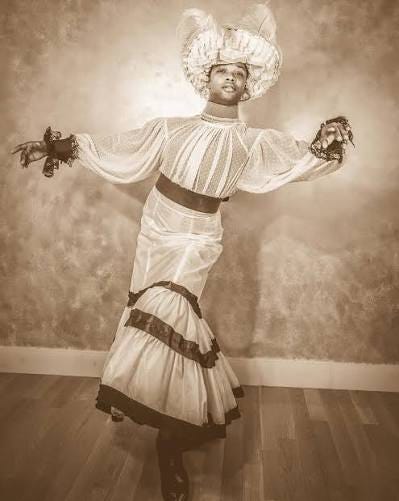
William Dorsey Swann, a freed slave, was the first recorded person in American history to host underground drag balls in Washington,D.C., during the 1880s and 1890s. Swann was also the first person known to call himself the “Queen of Drag,” and he later became one of the first known Americans to take legal and political action in defense of the queer community’s right to gather.
Back at Beaches, the final performance of the night came from a Black drag queen whose eloquent form invoked in me the remembrance of Swann and all the twentieth century queens who came after him. That particular performance, an evocative Beyoncè themed ritual, native only to Blackness was worthy of a standing ovation. One meant to honor the joy and struggle their performance represents. Which, despite my general malaise toward drag, is exactly what I gave every one of those queens.
It was there, as the show concluded, that I began to connect how the drama surrounding Jackie Hill Perry, still fresh on my mind no doubt had obscured another kind of drag performance entirely. I am talking about the gendered costumes where masculinity and femininity get mistaken for skin. The blocking and choreography masquerading as “traditional values.” And the stage play whose final act always ends the same: Straightness as the original model of God’s design.
The theater is caste.
The plot is endogamy.
The performance is heteronormativity.
Drag knows it is drag. Heterosexual order does not.
The Theatre is Caste
It is not uncommon in everyday life to hear some variation of the English poet John Donne’s famous line: “No man is an island unto himself.” A refrain so pervasive, and so widely affirmed across traditions, that it carries all the hallmarks of common wisdom.
But if Donne’s lyric expresses a truth we collectively share, then would it not also be true that no belief a person holds about morality, justice, or even human sexuality is derived purely from themselves alone? Or, to borrow from Donne, if no man is an island, then what unseen forces shaped the ground upon which he stands?
I believe Isabel Wilkerson, in her prolific work Caste: The Origins of Our Discontents, offers a devastating answer. With breathtaking detail, she reveals how familial, legal, and cultural practices are never merely our own, but a direct outgrowth of caste. An inherited theater set, staged and performed in stunning synchronicity across many cultures and civilizations.
Wilkerson writes:
“A caste system is an artificial construction, a fixed and embedded ranking of human value that sets the presumed supremacy of one group against the presumed inferiority of other groups.”
She continues:
“Caste is insidious and therefore powerful because it is not hatred, it is not necessarily personal. It is the worn grooves of comforting routines and unthinking expectations, patterns of a social order that have been in place for so long that it looks like the natural order of things.”
Beliefs about human sexuality are a deeply worn groove. And I, like most queer people, know a thing or two about such grooves. From my upbringing I would hear my mother, like so many church folk of that generation, describe homosexuality as “rebellion against God.” This was reinforced by the television preachers I admired, just as a younger generation now looks up to Jackie Hill Perry. For years those voices, imbued with the moral authority vested by caste, etched themselves into my young, developing conscience like an internal warning system. And every time I saw an attractive man and felt the stirrings of sexual or romantic desire, a crippling alarm would go off inside of me, one that regularly sent my body into states of panic, danger, fight, and flight.
l wanted to be a good son, so I took my mothers words to heart but secretly could never reconcile my natural attraction with the dogma of her belief. Such a cruel and arbitrary divine law I often wondered to myself as I lay in bed most nights. But the fact that it had been likely told to my grandmother, who inevitably told it to my mother, who then told it to me, was enough to minimize those doubts and mistake caste for divine truth.
The Plot Is Endogamy
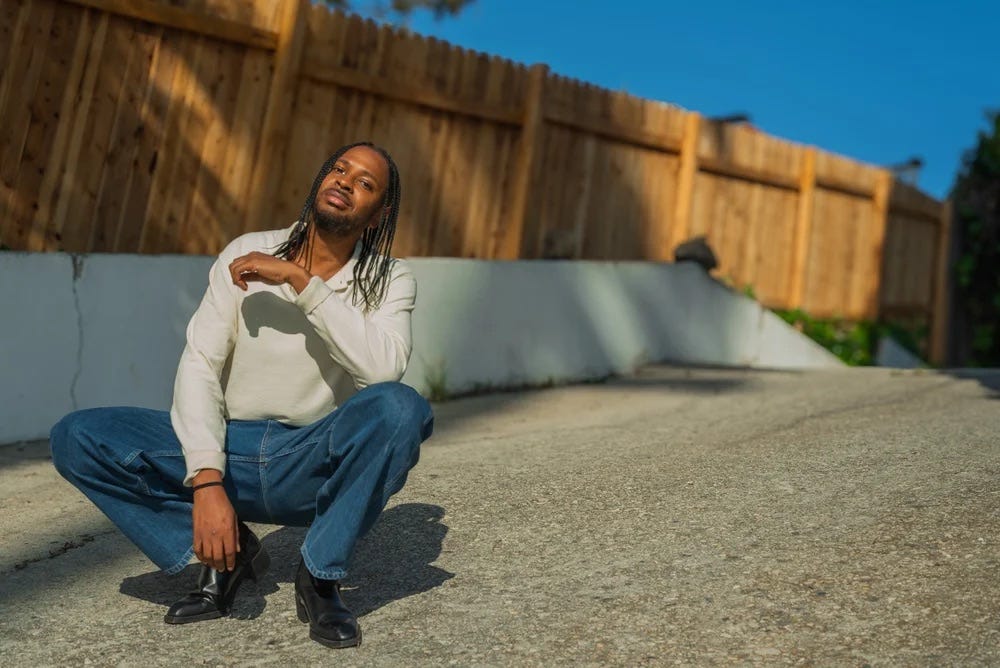
I lived the script inside of caste long before I ever knew its name. As the son of a preacher who later became a recording artist and worship leader, I was immersed from an early age in a world full of expectations. Every message from public education to Hollywood movies to church pulpits, carried an implicit or explicit expectation for who I should become. A message so pervasive it felt inevitable, even God ordained. I could never locate where it came from, but I always knew who it wanted me to be: straight, masculine, respectable, wealthy if possible, anything but gay.
Endogamy enforces caste boundaries by forbidding marriage outside of one’s group and going so far as to prohibit sexual relations, or even the appearance of romantic interest, across caste lines. It builds a firewall between castes and becomes the primary means of keeping resources and affinity within each tier of the caste system. Endogamy, by closing off legal family connection, blocks the chance for empathy or a sense of shared destiny between the castes. - Isabel Wilkerson, Caste: The Origins of Our Discontents
Endogamy is not a word we ever hear out loud, and yet much of our social and romantic lives are ordered by its plot inside the theater of caste. Whether in Nazi Germany, The American Jim Crow South or India’s Varna system Wilkerson names endogamy as a pillar of every caste system. Endogamy matters because caste cannot survive on law alone. Humans require neat stories, symbolic rituals, and elaborate ceremonies that teach us which marriages are legitimate, which bodies are holy or unholy, what kinds of intimacy are appropriate, and which forms of love threaten communal order. Most importantly, at least to me, endogamy teaches us who is centered and who must be excluded.
Wilkerson continues:
[Endogamy] makes it less likely that someone in the dominant caste will have a personal stake in the happiness, fulfillment, or well-being of anyone deemed beneath them or personally identify with them or their plight. Endogamy, in fact, makes it more likely that those in the dominant caste will see those deemed beneath them as not only less than human but as an enemy, as not of their kind, and as a threat that must be held in check at all costs.
While Wilkerson does not specifically address homosexuality as a core concern of endogamy in her work, the fallout on queer bodies like mine is glaringly hard to miss. Systems across cultures shaped by endogamic logic, from British colonial law to India’s Manusmriti, at minimum assume heterosexuality as the default starting place and at maximum codify clear anti-queer prohibitions. And these laws always have a way of creeping inside religious teaching. You hear its remnants every time a supposed well-meaning person says: “I just believe in the traditional family,” or “I just think men should be men and women should be women.”
These phrases are rarely neutral. They are dog whistles pitched high enough to sound humble and pious, but to queer folks they often mean: to be safe, you must perform heterosexuality. A pressure so pervasive that it can drive people not only to suppress their God-given desire, but to spiritually lobotomize themselves, shout “delivered,” and perform as “ex-gay”.
But I could never play the role well.
The drag never fit.
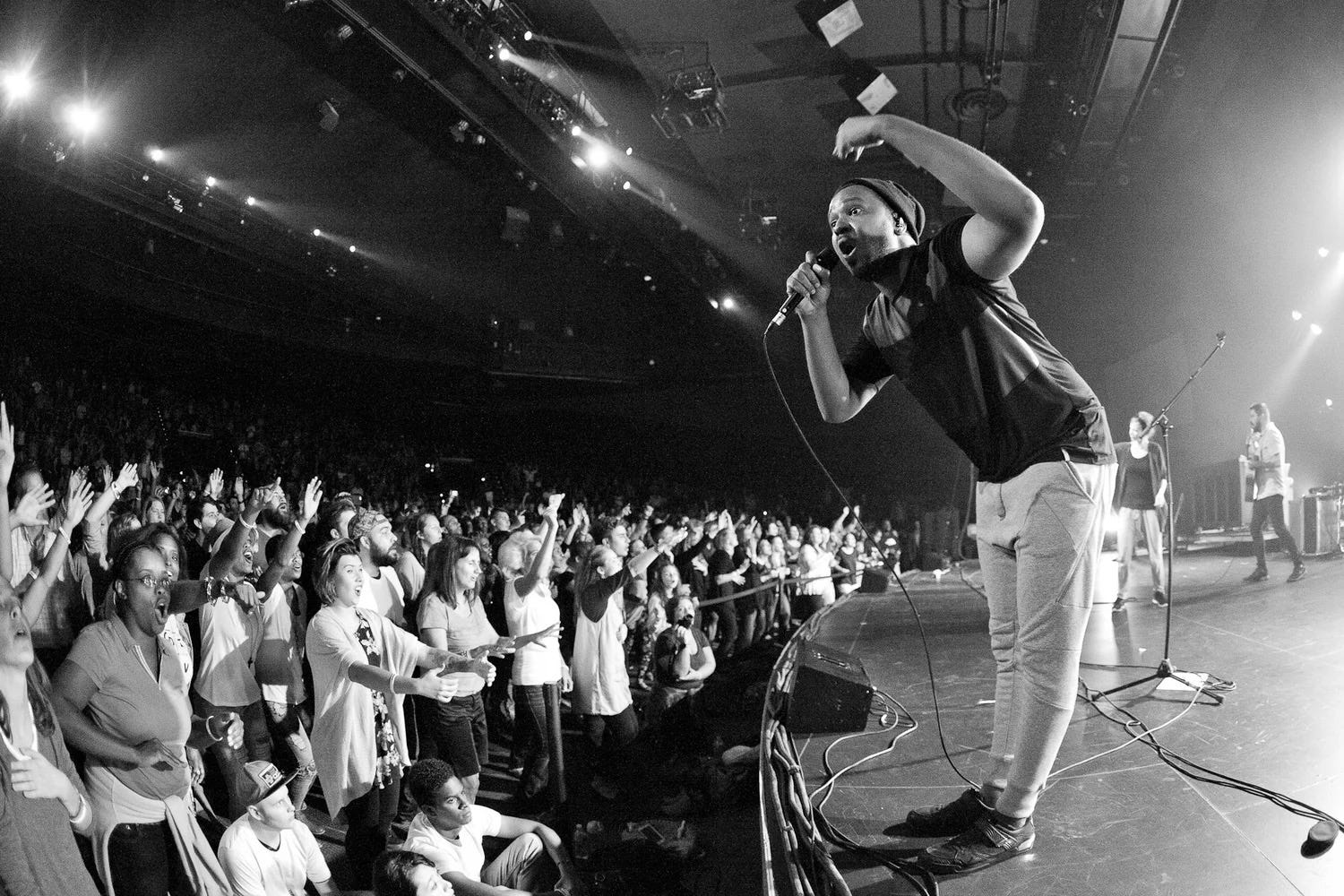
My songs are regular staples, sung in houses of worship around the world, and I knew that if I ever publicly came out it would cause serious repercussions for my publishing catalog, my bookings, and my livelihood. But in 2016, long before I was fully able to make that decision on my own, I was publicly outed on a stage by Christian leaders cosplaying as my pastors. Soon after my name was quietly yet broadly disseminated across the global Christian music scene as someone untrustworthy who shouldn’t be hired to sing. Fifteen years of a near-spotless reputation and career was irrevocably damaged from the whispers of strangers, colleagues and friends.
“You think your pain and your heartbreak are unprecedented in the history of the world, but then you read.” - James Baldwin, The Fire Next Time
It was here, in a moment of utter devastation that I discovered how my particular wounding lived inside a longer history of religious and political systems that police bodies, regulate intimacy, and punish people for crossing caste boundaries. It’s easy nowadays to forget how laws that reinforced segregation in American public life also made interracial relationships taboo, normalizing all manner of sexual, racial, and gender discriminations. This plot and its subsequent generational performances taught people who could touch, who could marry, who could inherit, who could reproduce, who could belong, and in my experience who could be cast out.
The Performance is Heteronormativity
We wrestle not against flesh and blood but against principalities and powers; spiritual wickedness in high places…” - Apostle Paul, The Book of Ephesians
For far too many, church is often the place where the dominant heterosexual in-group’s unconscious need for purity ends up becoming a wicked drama, turning victims into villains. Have you ever noticed how biblical defenders of heterosexual order possess enough imagination to envision evil in the form of a medieval Satan, yet can never interrogate the inherited theater, plot, and performance within themselves? Failing to see how they become The Satan.
French Scholar and anthropologist Rene Girard answers this psychological process of spiritual diversion in his book “I See Satan Fall Like Lightning“.
“In the Gospels, Satan’s power is his ability to make false accusations so convincing that they become the unassailable truth of entire communities. To call this process “Satan,” which is what the Gospels really do, is highly appropriate.”
Girard, who revolutionized the 20th century’s understanding of scapegoats, argued that human beings do not merely imitate one another’s behavior. We imitate desire itself. Envy births rivalry. Rivalry escalates into social crisis, and social crisis searches for a sacrificial victim onto whom it can project collective blame. The community then unites against the scapegoat in order to create peace. A peace that never truly lasts.
This never ending cycle of desire, rivalry, accusation, sacrifice, and reconciliation is what Girard called the scapegoat mechanism. In this sense, Satan is not a centuries old fallen angel, but the process by which communities become convinced that their violence is God’s justice, their exclusion righteousness, and their scapegoats deserving of condemnation.
Satan casting out Satan.
Scene. Set. Action.
Though I do not suppose that is what Jackie Hill Perry meant when she said, “Satan is always doing something…” Like so many righteous apologists of Christianity before her, Pride Month is merely another rehearsal within the theater of caste. Instead of being quiet in the face of difference, heteronormativity and its faithful actors do the opposite. They perform loudly, often ceremonially, a grand sacred pageant meant to convince us that what we are witnessing is not a performance at all, but simply nature itself. But just as they assume queerness is an act and heterosexuality is nature, what if what they assume about themselves is actually something else entirely?
In Fear of a Queer Planet, Michael Warner gave a name to that “something else”: heteronormativity. He describes it as the social system that allows heterosexual culture to interpret itself as society itself. A totalizing worldview that sees queerness as deviant, then attempts to confront, convert, discipline or eradicate it through soft power (coercion, shame, exclusion) or hard power (law, incarceration, and mob violence) This performance of heteronormativity, though repetitious and tiresome to audience and performer alike, is necessary because caste cannot sustain itself naturally. It must be rehearsed and reproduced generation after generation.
If the stage is caste and the script is endogamy, then heteronormativity is drag that has forgotten it is drag. And much like queer drag performers, heteronormativity has its own pomp and circumstance. Heteronormativity can look like highly curated weddings and bridal showers performed more for Instagram clicks than covenant. It can look like expensive gender reveals where soon-to-be parents weep with disappointment over the sex of the child yet to be born. It can look like fathers who gift purity rings to their daughters but never their sons. And it can show up as emotionally stunted men lamenting the decline of masculinity on podcasts, shouting “no homo” while secretly battling bisexual thoughts.
The Courage To Be
As I was writing this essay, I met a straight-identifying man caught in a dire conundrum. He craved male touch and affection, but every time he reached for it, his skin would crawl and his mind would race as waves of uncleanness washed over his entire body. He came from a theocratic country rife with religious shame, where queer desire alone could endanger both his life and the safety of his family. Again and again, he shouted at me, “I feel like I want to die. Is this normal?”
I wish I could say his despair was merely an emotional spiral I bore witness to. Unfortunately, his inability to discern the theater of his own desire led to a brief sexual violation toward me, one in which my consent was momentarily ignored, my boundaries crossed, and a piece of property was destroyed. As awful as it was to experience, I immediately knew that I was caught inside of a hellish drama neither of us was ever supposed to be in.
He, however, did not.
There is an implicit understanding between most queer folks upon meeting. A communal recognition of struggle rivaled only by the solidarity many Black people experience when we find one another in public spaces. I empathized with him. In many ways, I am him. Or at least, I thought so.
But there was no solidarity that night, and therefore no consideration or protection for me either. His performance of masculinity was simultaneously fragile and narcissistic. The gendered costume he had proudly worn his entire life was unraveling at the seams before both of our eyes, and he could not bear to see me watching. So he did what those men before him taught him to do in the face of deep seated fear and inadequacy.
He tried to punish the witness.
His actions were intolerable, extreme, and nonconsensual. Nothing about his personal suffering excuses them. The harm he attempted to cause me will not be forgotten easily, if ever at all. And yet, I cannot help but ponder the tragedy of his predicament.
I regularly hear from queer people who, day after day, live under the weight of guilt and shame from the impact of caste and the performance of religious fundamentalism that often accompanies it. Fear of hell, religious and social excommunication, being surveilled, arrested, and beaten are the cards so many of us were dealt, and some continually have to deal with. But if queer people must be part of this performance, then our role should be to demonstrate the courage to show up as we are inside a theater designed to make our very existence feel invalid.
Maya Angelou once observed that courage is the greatest of all virtues, for without courage one cannot practice any other virtue consistently. I believe her to be right. Queerness, in all its expressions, is an act of courage because it refuses the demands of caste, disrupts the plot of endogamy, and declines to perform the preordained ritual of heterosexual order. It is what theologian Paul Tillich called “the courage to be,” the willingness to affirm one’s existence in the face of a world determined to deny it. And it is that same courage, all these years later, that gives me the power to say with total clarity and utter conviction that my mother was indeed wrong.
Homosexuality is only rebellion against God if your idea of God is synonymous with caste. Because to honor caste, is to dishonor the God who frees oppressed people. And to mistake endogamy as holy writ is to worship human order rather than the God who self-identifies as liberation.
That celebratory night in West Hollywood on the first night of Pride, cheering on drag queens while my traumatized nervous system slowly relearned joy, was truly a night well spent. It reminded me that Jackie Hill Perry and those like her are not aberrations, but actors reenacting a centuries old performance of heteronormativity. Once again, seeing the hidden theater of caste shifted the conversation, allowing me to recognize the hidden performance unfolding in plain sight. The question is not simply whether our beliefs about race, class, gender, and sexuality are righteous, wicked, or somewhere in between. The bigger question is who handed us those beliefs, what hidden social order were they designed to preserve, and what becomes of ourselves and each other when we mistake an inherited performance for the natural order of things.
The theater is caste.
The plot is endogamy.
The performance is heteronormativity.
Queer drag knows it’s a performance.
Heteronormativity does not.
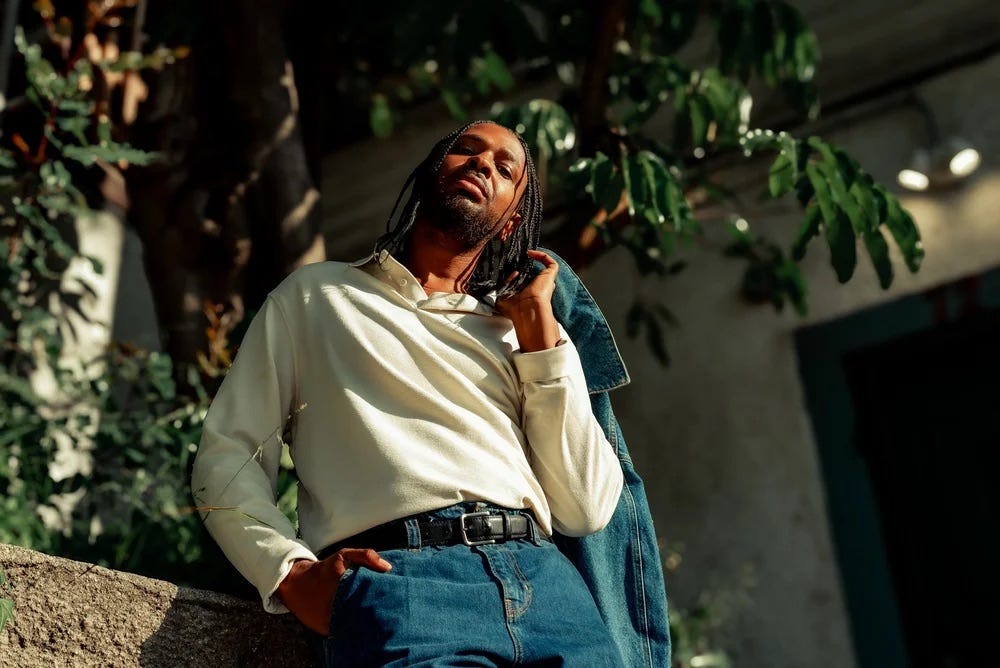
Follow William here on IG.
 | A guest post by
|